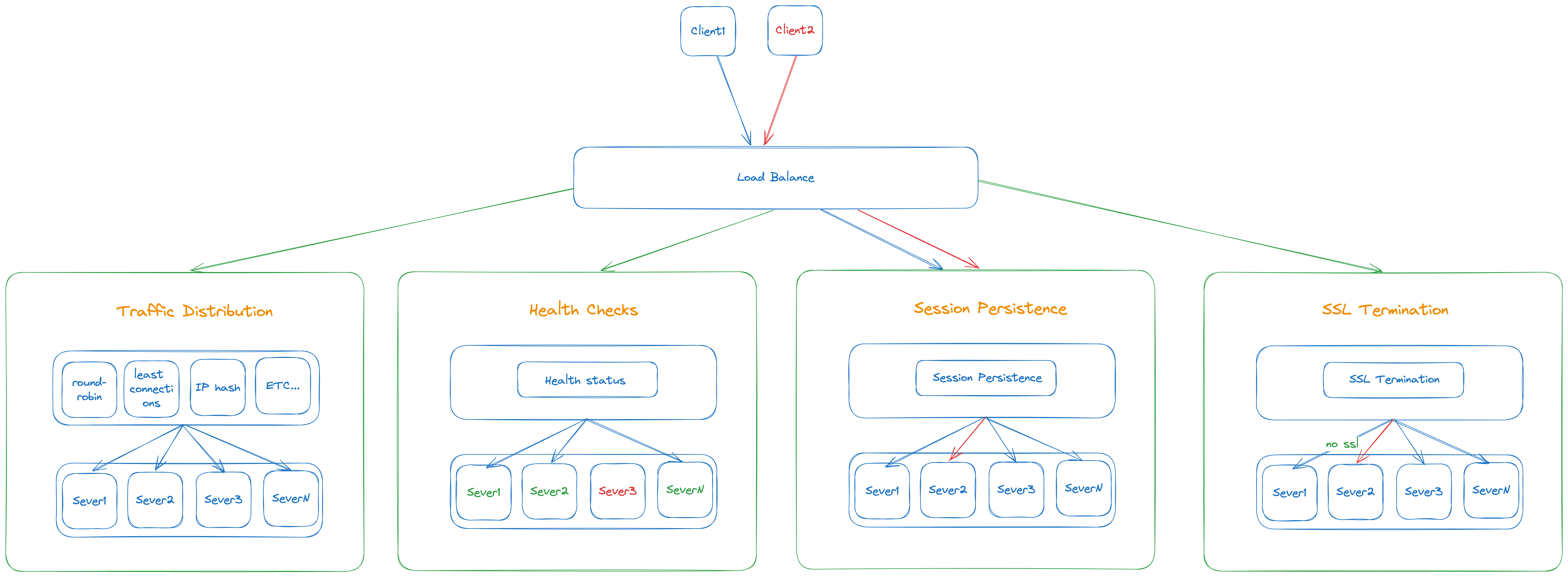
Load Balance
A Load Balancer is a network device or software that distributes network or application traffic across multiple servers. The primary purpose of a load balancer is to increase resource utilization, maximize throughput, reduce response time, and ensure that the load is evenly distributed across servers, thus preventing any single server from being overloaded, ensuring high availability and reliability of applications.
The working principle of a load balancer typically involves the following steps:
-
Traffic Distribution: When a client makes a request, the load balancer receives the request and decides which server to forward it to, based on predetermined policies such as round-robin, least connections, IP hash, etc.
-
Health Checks: Load balancers periodically check the health status of backend servers to ensure that all traffic is sent to healthy servers. If a server fails, the load balancer automatically redirects traffic to other healthy servers.
-
Session Persistence: In certain application scenarios, maintaining session continuity between the client and the server is necessary. Load balancers can use specific session persistence techniques (like cookie-based session affinity) to ensure requests from the same client are forwarded to the same server.
-
SSL Termination: Load balancers can handle encrypted SSL traffic; they decrypt the encrypted requests upon receipt and then forward them in plain text to the backend servers. This can reduce the computational burden on the backend servers.
Load balancers can be deployed on physical hardware, virtual machines, or as part of cloud services. They play a crucial role in ensuring websites, applications, and databases can handle high traffic and provide stable service.